Spontaneous Encounters between Baltic Designers in the Late 1980s and Early 1990s through Exhibitions: Transforming Notions of Performativity and Experimental Design Practices
DOI:
https://doi.org/10.37522/aaav.122.2026.371Keywords:
postmodernism, neon, interior design, poster design, experimental design, art designAbstract
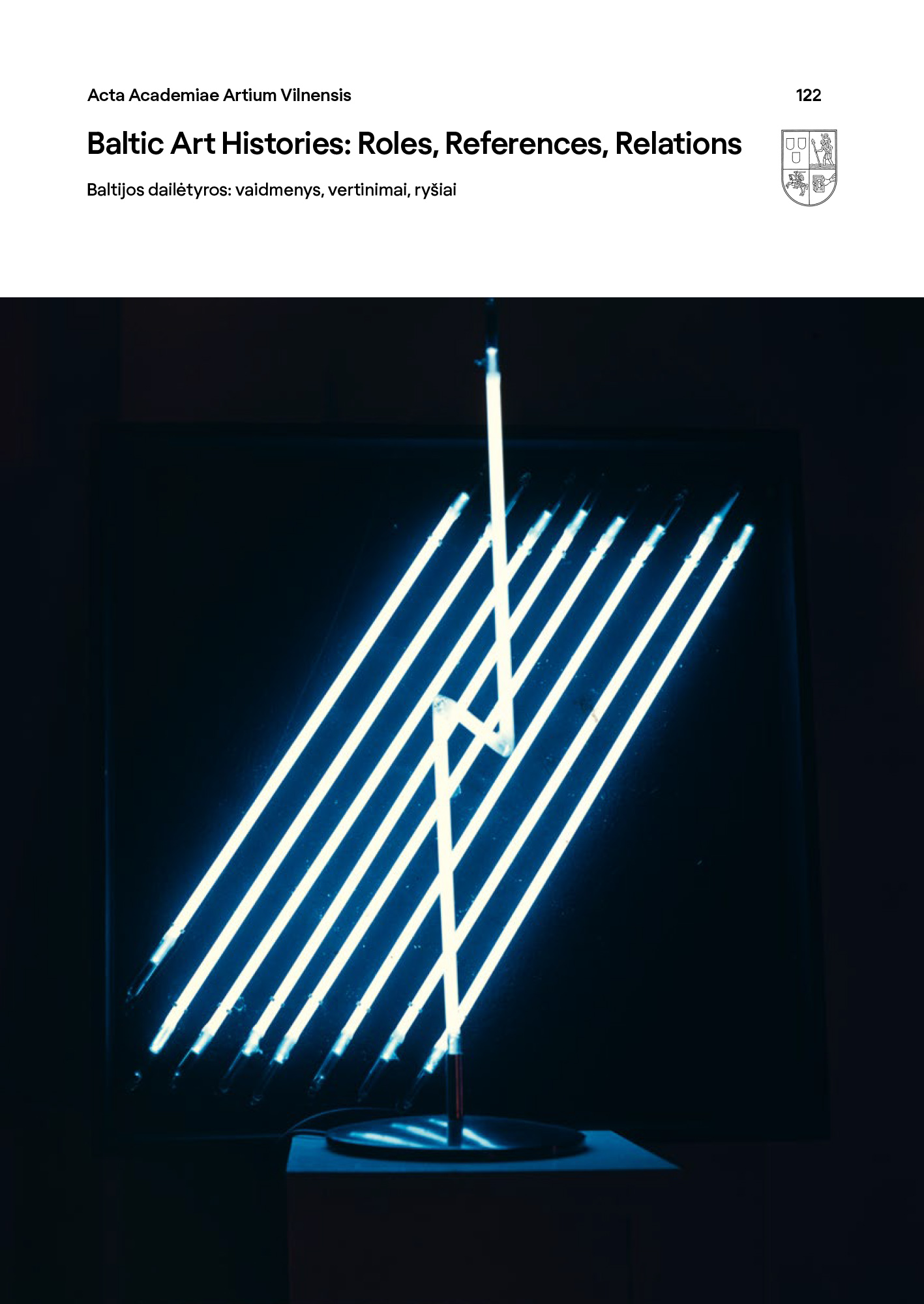
While the design economies of Estonia, Latvia, and Lithuania had been closely interconnected under the Soviet occupation, the collapse of the Soviet empire also brought new conditions and possibilities. As mass production declined, art design and design exhibitions became increasingly important. This article analyses and compares two exhibitions, Neon–88 (Klaipėda, 1988) and Ruum ja Vorm V (Space and Form V, Tallinn, 1989–1990). Although they emerged within a similar period and included designers from all three Baltic countries, their organisational structures and outcomes differed fundamentally. Neon–88 exemplified a new type of exhibition operating outside institutional frameworks and comprising largely avant-garde objects, whereas Ruum ja Vorm V, organised by the Estonian Art Fund, reflected an attempt to remodel existing structures. Through a close examination of these two exhibitions, the authors identify broader developments in Baltic design during the final years of the Soviet Union and critically analyse them from a contemporary perspective. The article explores the nature of the encounters that took place between individuals and organisations in these two case studies in order to analyse the changing conceptions of “Baltic design.” During the 1990s, the reconstruction of national narratives became a central concern in all three Baltic countries. The two exhibitions examined here already reveal this emerging tendency, raising the question of how design practices and designers responded to the need to reposition themselves and their cultures within these shifting paradigms.
Downloads
Published
How to Cite
Issue
Section
Categories
License
Copyright (c) 2026 Karolina Jakaitė, Triin Jerlei

This work is licensed under a Creative Commons Attribution 4.0 International License.
